No. Not this week, and not for a long while yet. On September 17, 2026 the European Commission proposed the KIDS Act, which would switch AI chatbots off by default for children across the EU. It is a proposal, not a law: the European Parliament and member states still have to negotiate the final text. And it would not apply in the US or the UK.
So if you saw a headline this week about the EU banning AI chatbots for under-15s and wondered whether your child is about to lose ChatGPT, nothing on their phone changes because of this. What the proposal does give you is a checklist, and you can use it tonight.
What the European Commission actually proposed
On September 17, 2026 the Commission published its proposal for the EU KIDS Act, which stands for EU Keeping Internet Digital Spaces Accountable and Trustworthy. It covers social networking and video-sharing services, online games, app stores, and AI chatbots and companions.
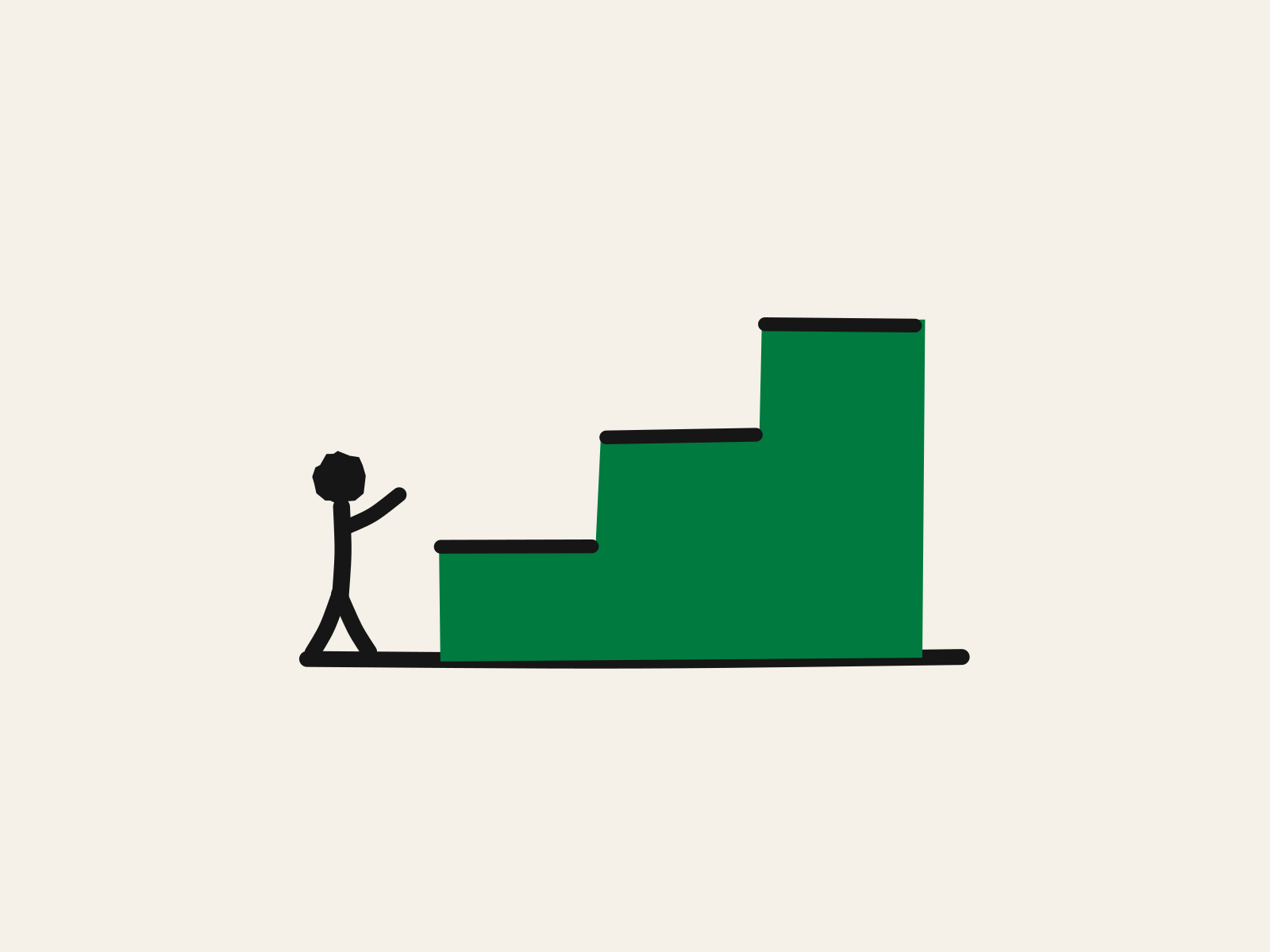
The headline is an age staircase, which is the Commission's own word for it. Under 13, no independent social media accounts, and access to child-friendly video services only through a parent's account, with personalized feeds switched off and a one-hour daily limit. From 13 to under 15, what the Commission calls "a mini account managed by a parent or guardian, with limited features and a time restriction of 1 hour per day", where the parental tools are always on. At 15, a young person can open an account of their own.
Age checks would use certified tools rather than an uploaded passport, including an EU age verification app that, in the Commission's words, "does not retain identity documents or biometric data". Fines could reach six percent of a company's worldwide annual turnover. And the proposal "will now be examined by the European Parliament and the Council, who will negotiate and decide on the final text before it becomes law". That last sentence is the one the headlines left out.
What would change for AI chatbots
This is the first time a major regulator has written down, in plain terms, what it thinks makes a chatbot risky for a child.
Under the proposal, AI chatbots would have to be turned off by default for children rather than switched on and waiting. They "may not use designs that simulate human relationships in ways likely to create emotional dependency". By default they "may not carry a child's earlier conversations into later ones". They could not be automatically promoted to children. And they would have to be risk-tested before launch and monitored afterward, with access for under-13s only through parental controls.
Strip out the legal language and the Commission has named three things: a chatbot that is on unless you turn it off, a chatbot that remembers, and a chatbot built to feel like a friend.
That the third one matters is not only a regulator's hunch. In a survey of 500 young people aged 11 to 17 in Austria, carried out in October and November 2025 and published on March 5, 2026 by the Austrian Safer Internet Centre, 94 percent said they used AI chatbots, 24 percent used them for friendly conversation and 19 percent for romantic conversation. A quarter said they found it easier to discuss personal matters with a chatbot than with a person. These are self-reported answers from one country, not an EU-wide measurement, and they describe what young people say they do rather than what it does to them.
One figure from that survey has nothing to do with friendship, and it is the one I would want every parent to know: 28 percent wrongly believed that what they type into a chatbot is confidential.
Does any of this apply in the US or the UK?
No, and it is worth being precise about what does.
In the UK, the regulator Ofcom set out on December 18, 2025 which chatbots fall under the Online Safety Act. A chatbot is covered if it works like a user-to-user service, or searches across more than one website or database, or can publish pornographic material. A chatbot sits outside the Act if all three of these are true: it only lets people interact with the chatbot itself and no other users, it does not search multiple websites or databases when answering, and it cannot generate pornographic content. That third combination is the gap. The private one-to-one conversation, which is the thing most parents are actually worried about, is the case the Act was not built around.
In the United States there is no federal equivalent. There is state law, and California moved furthest: on September 10, 2026 the governor signed a package of child safety bills including SB 1119, known as Adam's Law, which requires companion chatbot operators to put crisis protocols, parental controls and notifications in place when a child turns off a safety setting, plus independent child safety audits. I wrote about what that law does and does not do for a family when it was signed.
So the honest position, if you are reading this in Ohio or Oxfordshire, is that the EU proposal changes nothing for you, and the rules that do apply to you are thinner than the headlines suggest.
What I Would Do at Home
I have spent years on stages in more than thirty countries and in rooms advising governments on AI in education, and the pattern repeats: the law arrives about two years after the thing it regulates, and by the time it lands the children have moved on. Waiting for it is not a plan. But a proposal is still useful to a parent, because a regulator with lawyers and researchers has just done the work of deciding what actually matters, and published the list.
The most useful thing in this proposal is not the ban. It is the list: three things a chatbot should not do to a child, and all three are settings you can check tonight.
I would call them The Three Switches: the three things the EU's proposal says an AI should not do to a child, and the three things you can check on your child's phone tonight without waiting for any law. Is it switched on by default? Does it carry yesterday's conversation into today? Is it written to behave like a friend? Every one of those has a setting behind it. None of them needs a regulator.
The first switch is the one most parents have never looked at, because an assistant that appeared inside an app your child already had was never a decision anyone made. The second is where that 28 percent figure bites: memory is usually on, and a child who thinks the conversation vanishes is wrong about the deal they are in. It is worth knowing what a parent can and cannot see of those conversations, which is less than most people assume. The third is less a setting than a choice of app, and it is the one worth talking about rather than configuring.
That is my reading of the proposal rather than anything the Commission says a parent should do.
What to do this week, by age
Under 8. Nothing to configure. Keep AI on your account and in the same room. If an assistant has appeared in something they use, turn it off rather than supervise it.
8 to 12. Open the AI features in the apps they already have and check whether each one is on by default. Then ask, without making it an inspection: "Does the one you use remember what you told it last time?" Most children do not know. Finding out together is the lesson.
13 to 15. This is the band the proposal is most exercised about, and the one where memory matters most. Turn memory off together, or open what is stored in it and let them decide what to delete. You could say: "I read that a quarter of people your age think this stuff is private. I want to check what it actually keeps."
16 to 18. Skip the settings and have the argument instead. They will be voting on rules like these. You could say: "The EU wants to stop chatbots being built to feel like friends. Do you think that is sensible or patronizing?" You will learn more from the answer than from any control panel.
None of this is guaranteed to hold. Memory settings move between updates, a child can open a browser and use a chatbot with no account at all, and every age limit here is self-declared and weakly enforced. Where your child's school has a rule about AI, that rule comes first at school, whatever you decide at home. And if what worries you is your child's mood rather than their settings, that is a conversation for your pediatrician or family doctor, or the school's safeguarding lead, not a menu.
What to watch next
Three things. Whether Parliament and the Council keep the chatbot provisions when they negotiate, because those are newer and less tested than the social media ones. Whether the companies ship the changes everywhere rather than only in Europe, which is what happened with a good deal of privacy law. And whether Ofcom's research into chatbot services, which it set out in June 2026 under the Online Safety Act, moves the UK's position on the private one-to-one conversation.
I will cover each of those here when it happens.
If your child's school has not spoken to parents about AI yet, it is worth asking what its own arrangements look like: a readiness check is the work I do with schools, and it is a fair thing for a parent to ask about. And if you would rather not track this yourself, I write a Sunday newsletter that keeps teachers and parents current without the panic. Parents are very welcome.
Dan Fitzpatrick is a former teacher and assistant headteacher who now works with schools and governments on AI in education. More about Dan.